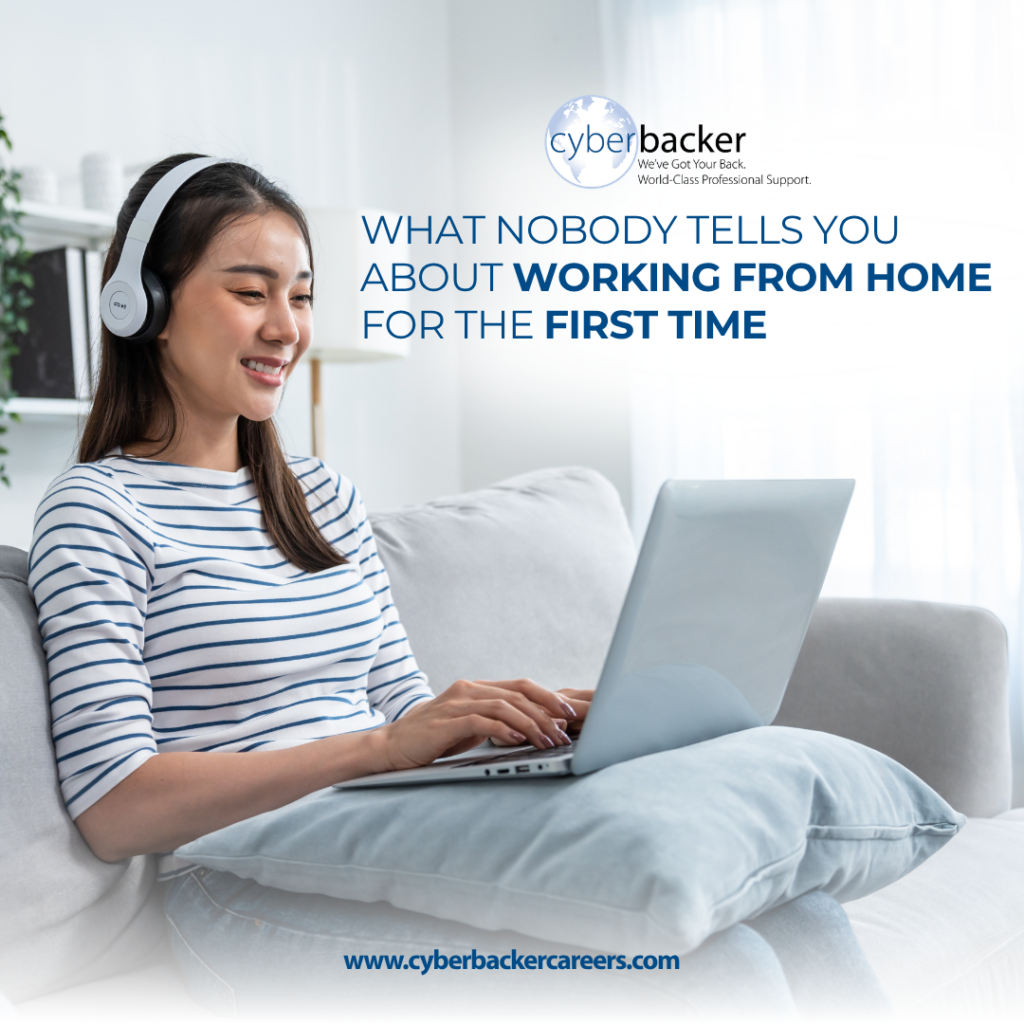
Working from home for the first time comes with a lot of advice. Buy a good chair. Set your working hours. Stay disciplined. That guidance is worth following. But there is more to the transition than the practical checklist covers.
The gap between remote work expectations and reality is wider than most people expect, and that gap is where a lot of first-timers quietly struggle, not because they are not capable, but because the early part of the transition has its own learning curve that takes time and the right support to move through.
Whether you are coming from a BPO, stepping back into the workforce after time away, or starting your very first job, this is the grounded, honest guide to what working from home for the first time is really like and what actually helps you get through the early part with your confidence intact.
The First Week Is an Adjustment, and That Is Completely Normal
The work-from-home adjustment period is one of the more overlooked parts of the remote career transition. It is worth talking about honestly because the first week, and sometimes the first few weeks, can feel genuinely disorienting, and knowing that in advance makes a real difference.
That disorientation is not a warning sign. It is a normal part of rewiring how your brain relates to work when the environment around you has changed completely.
Why the First Few Days Feel Disorienting
In a traditional office or call center setup, your brain gets a series of physical cues that signal it is time to work: getting dressed, commuting, walking into a building, and sitting in a specific chair. These cues act like psychological on-switches.
When you work from home, those cues disappear. Home carries strong associations with rest, family, and personal life. Overriding those associations takes real effort and time, not willpower alone, but deliberate habit-building.
You might find yourself overworking in the first week because you feel the need to prove yourself to a screen, or underworking because structure has not been established yet. Both are common. Both can be corrected.
What the Adjustment Period Actually Looks Like
The disorientation of the early days is temporary. Pattern builds with time, and confidence follows the rhythm.
In the first few days, everything is unfamiliar. Tasks that should feel straightforward take longer because the environment itself is new and the mental cues that used to signal work time are still being rebuilt.
As the days pass, communication starts to feel more natural. The workday begins to take shape. The energy that was going toward just figuring things out gradually shifts toward actually doing the work well.
With the right structure and support in place, the basics become habitual. That is when remote work starts to feel less like an adjustment and more like a career.
Struggling at the start does not mean remote work is not for you. It means you are still at the start.
What Is Worth Knowing Before You Start
These are some of the challenges that tend to come up early for first-time remote workers, and they are worth naming clearly so you can meet them prepared rather than caught off guard.
Self-Discipline Is a Skill You Build, Not a Trait You Either Have or Do Not Have
One of the most common fears among first-time remote workers is that they are simply not disciplined enough. This belief stops a lot of capable people before they even start.
Self-discipline in a remote setting is not a fixed personality trait. It is a practiced system of habits, environmental design, and accountability. The question is not whether you have discipline, but whether you have built the structures that make focus easier than distraction.
Someone who struggled to concentrate in a traditional office may find that working remotely suits them far better than they expected. Knowing how to stay focused while working from home is something you develop, not something you are born with or without. It is also something that the right training environment actively builds in you. At Cyberbacker, developing that accountability and professional structure is part of the preparation every remote professional goes through before they ever work with a client.
Loneliness Hits Differently Than You Expect
This one catches almost everyone off guard, especially if you are coming from a BPO or call center environment where social interaction was constant and built into every shift.
The loneliness that comes with remote work is not always about missing specific people. It is about missing the ambient energy of a shared physical space. The casual conversations between calls. The sense of being surrounded by people who are working toward the same thing. That texture is hard to replicate and easy to underestimate.
In the Philippines, where a strong sense of community and personal relationships are deeply valued, the absence of in-person office interaction can be a jarring adjustment for remote workers. If you are used to forming close ties with colleagues, sharing meals, and celebrating milestones together, the shift to remote work is a significant social transition. Only 43 percent of Filipino remote employees report feeling fully connected to their teams, even as 91 percent express a preference for hybrid or fully remote work over a full-time office setup.
Acknowledging this early is not a reason to avoid remote work. It is a reason to be intentional about how you build connections and community once you start. Relationship is one of Cyberbacker’s core values. That means community here is not an afterthought. It is woven into how the culture works, and every remote professional is part of something bigger than just a job.
Your Home Setup Matters More Than You Think
Many first-timers treat their setup as something they will sort out once they get the job. That approach creates unnecessary stress in the first week and can damage your professional credibility before you have had a chance to demonstrate your actual skills.
If you are starting with remote work with no experience, the setup essentials to prioritize are a stable wired internet connection, a dedicated workspace, even if it is just a corner of a room, a reliable device that meets minimum specifications, and a noise-canceling headset. These are not luxuries. They are the basic infrastructure of a professional remote career. They are also the same standards Cyberbacker requires, not to create barriers, but because a solid setup is what makes reliable, high-quality work possible from day one.
A slow connection does not just cause technical problems. It drains mental energy, disrupts workflow, and signals to clients and employers that the basics are not in order. Getting this right before day one is one of the highest-leverage things a new remote worker can do for a home office setup as a beginner.
The top challenges in remote work setups were intermittent internet connection at 60.1% of establishments, difficulty monitoring employee performance at 40.1%, and difficulty communicating with employees at 29.5%.
These numbers reflect the same challenges individual remote workers face. Internet stability and clear communication are not technical problems. They are professional ones.
Communication Becomes Your Most Important Skill
In an office or call center, a significant portion of communication happens passively. Body language, proximity, and casual conversation fill in a lot of gaps without anyone having to think about it.
Remote work removes all of that. What replaces it is deliberate, written, and video-based communication that has to carry the full weight of professional relationships across a screen.
It is easy to underestimate how much of your reputation in a remote role will be built through how you communicate. Responsiveness, clarity, and the ability to express intent without ambiguity become daily professional skills. Overcommunicating slightly is almost always better than undercommunicating. Proactive updates build trust faster than almost anything else.
What Actually Helps You Find Your Footing Faster
The adjustment is real, but it is also shorter when you approach it with the right habits. Here is what actually helps.
Build a Routine Before You Need One
Do not wait until the lack of structure becomes a problem. Build a daily schedule before your first day starts and treat it as a professional commitment rather than a personal preference.
A good remote routine does not mean working rigid hours with no room to breathe. It means having consistent start and end signals that help your brain shift into and out of work mode. Getting dressed before logging in, beginning each day with the same first task, setting a defined finish time, and building a short wind-down ritual are all simple but effective ways to create the boundaries that your commute used to provide.
Work from home productivity comes less from grinding harder and more from removing the daily decision fatigue of figuring out when, where, and how to work.
Treat Your Setup as an Investment in Your Own Performance
A reliable setup is not an expense. It is the foundation your performance is built on. Every hour you spend troubleshooting a slow connection or a device problem is an hour you are not delivering work, and it is an hour your client or employer notices.
Prioritize internet stability above everything else. A dedicated workspace signals to everyone in your household that work is happening, and it signals to your own brain the same thing. Starting with the right tools in place removes one of the biggest variables in how well your first weeks go.
Find Your People Before You Feel Isolated
Community in remote work is not a soft benefit. It is a measurable driver of how well remote workers actually perform.
The majority of Filipino workers had experienced stress and burnout at work, with heavy workloads, interpersonal conflict, and lack of support, which suggests that company policies and mental health support structures played a measurable role in worker wellbeing and overall job performance, underscoring that how an employer shows up for its people directly affects how well those people show up for their work.
Do not wait until loneliness sets in to look for that connection. Build it early. In a structured remote career environment, this happens through onboarding cohorts, team channels, and regular check-ins. In freelancing, it requires significantly more intentional effort.
What Remote Work Looks Like When You Find Your Footing
The gap between remote work expectations and reality is widest in the first few weeks and narrows considerably as structure and confidence build. If you approach the transition with intention, the shift becomes noticeable, and it becomes real.
The anxiety of the early days settles into routine. Communication with clients or leaders finds its rhythm. The financial reality starts to feel more concrete, especially when you are earning in a stronger currency.
The counterbalance between personal and professional life becomes something you actively manage rather than something that just happens to you. You start to understand your own rhythms, when you work best, when you need a break, and what conditions produce your best output.
That is when remote work stops feeling like an experiment and starts feeling like a career.
84 percent of Filipino professionals are eager for remote international work, significantly above both the Southeast Asian and global averages. The global average stood at 66 percent, making the Philippines one of the most remote-work-ready workforces in the world.
You already know what remote work can offer. The question most people are really asking is not whether it is worth it. It is whether they will be supported well enough to get through the early part and reach the place where it actually feels worth it.
How the Right Remote Career Environment Changes the Experience
Not all remote work is the same. The structure, the support, and the community surrounding the work make an enormous difference in how quickly someone finds their footing, especially when they are doing it for the first time.
Freelancing and structured remote employment are fundamentally different experiences. A freelancer figures most of it out alone. A remote professional within a structured company like Cyberbacker has access to onboarding, training, clear expectations, and a support system from day one.
Filipino employees working fully remotely reported the highest job satisfaction scores at 4.82 out of 7, and expressed greater contentment with their overall work arrangement. Overall, 85 percent of Filipino workers reported positive or neutral responses on job satisfaction in 2024, a significant jump from 68 percent before the pandemic. The data shows that Filipino remote workers who find their footing reach a level of satisfaction that consistently outpaces their office-based counterparts.
This finding reflects exactly what the right environment can do. Higher engagement is possible in remote work, but it requires real support, not just a laptop and a login.
Cyberbacker is one example of what a structured, values-driven remote career environment looks like in practice. Before being matched with a client, every remote professional goes through training to align with their client’s systems. There is a community of remote professionals, leaders, and mentors around them from day one. Career growth is built into the structure, not left to chance.
For someone working from home for the first time, that kind of foundation makes a real difference. Having support, structure, and a community around you from day one changes what the early part of the journey feels like.
Starting Remote Work the Right Way
The first time you work from home, nobody hands you a map. The adjustment is real. The challenges are real. And building a remote career that actually holds together takes more than good intentions and a decent laptop.
But the version where you build real structure, find genuine community, develop skills that translate across roles and industries, and earn in a way that reflects your actual contribution? That version is available to people who are prepared for what the transition genuinely involves.
Starting a remote career takes more than a good internet connection. It takes the right preparation, the right mindset, and honestly, the right company behind you.
If you are ready to take the first step into remote professional work with training, support, and a community that has been through this before you, Cyberbacker is a good place to start.