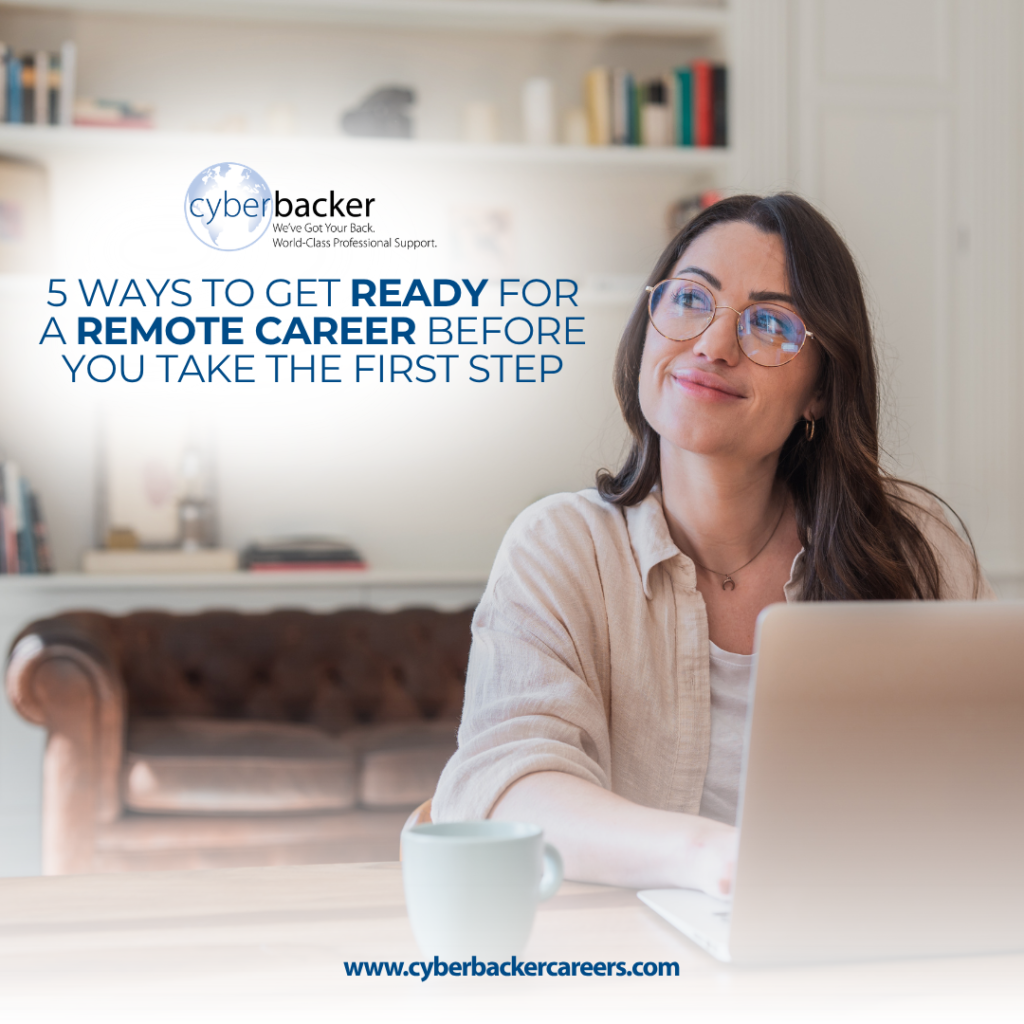
Deciding you want a remote career is one moment. Being ready for one is a series of smaller ones, and most of them happen quietly, long before there is anything to send anywhere.
That gap between wanting and being ready is where a lot of people stall. Not because the work is out of reach, but because readiness looks like nothing from the outside. There is no announcement, no visible progress, just a set of things you put in place one at a time.
The good news is that every one of those things is within your control right now. You do not need a client, an offer, or a start date to begin. At Cyberbacker, we work with professionals building long-term remote careers, and the five ways below are what we consistently see in the people who make this move well.
Get Clear on What You Want the Work to Give You
Before anything practical, get specific about what you are moving toward. Remote careers look different depending on what you are optimizing for. Someone who wants steady income will weigh opportunities differently from someone who wants room to grow into leadership, and both will look at things differently from someone who wants their hours back.
Write it down if it helps. Income, schedule, learning, stability, long-term growth. Rank them honestly. This is not a personality exercise, and there is no correct answer. It is a practical filter, and it saves you from evaluating every opportunity from scratch.
That clarity also shapes how you talk about yourself later. When someone asks what you are looking for, a specific answer carries further than a general one.
Build on the Skills You Already Use
Most of what remote work runs on, you have used before in some form. Written communication carries more weight when people cannot read your expression, so clarity in a message matters more than it did across a desk. Organizing your own time matters more when nobody is structuring the day for you.
Look at the tools first. Shared calendars, task boards, documents that several people work in at once, video calls. Familiarity with these is quick to build and easy to demonstrate. Pick one you have never used and spend a week inside it.
AI tools are part of how a lot of remote work runs now, and comfort with them has become part of the baseline rather than a specialty. Our article on what remote work looks like when AI is part of the job goes into what that looks like.
Prepare the Setup You Will Work In
Remote work depends on the connection more than anything else on your desk. Wired connections tend to hold steadier than wireless ones, and knowing what your current setup can handle during a long video call tells you whether anything needs upgrading. Our technical requirements give you a concrete benchmark to measure yours against.
Beyond that, a computer that runs several programs at once without struggling, a noise-canceling headset with a clear microphone, and a spot where you can sit and be heard properly. The space does not need to be a separate room. It needs to be somewhere you can consistently work and consistently be understood.
Worth thinking through early: what you would do if the connection went down mid-task. A backup option, even a modest one, is the kind of thing that only matters once and matters a lot.
Put Your Professional Profile Together
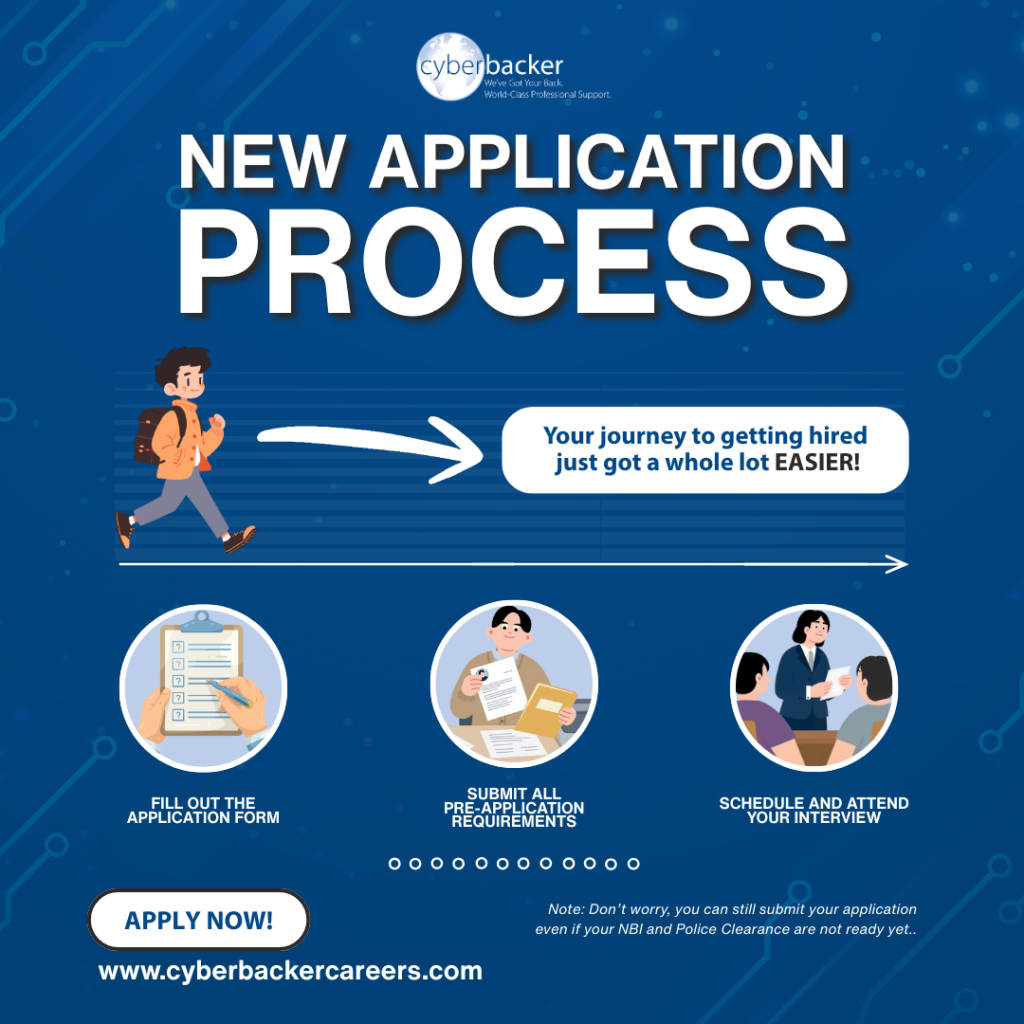
Your professional profile is part of getting started with Cyberbacker, and it does more than record where you have worked. It is what we use to match you with a business whose needs line up with what you can do, so the detail you put into it shapes the fit you end up with.
Focus on what you have done rather than what you were called. A job title tells us very little. Translating past work into terms a remote role can read comes down to the systems you handled, the volume you managed, the problems that came to you, and the results you can point to, all of which travel across industries in a way that titles do not.
Keep supporting documents together in one place while you are at it. Identification, records from previous roles, certificates from any training you have completed. Gathering these once saves you from hunting for them one at a time later.
Learn How Remote Hiring Works
Remote hiring runs differently from what you may be used to, and knowing the shape of it lets you prepare properly rather than guess.
Expect the conversation to happen over video, which means your setup is part of the impression whether you intend it or not. Expect some form of assessment, since companies hiring for remote roles need a read on how you work independently. At Cyberbacker, the process is about matching you with a business that has a specific need rather than filling a generic seat.
None of this is difficult once you know it is coming.
Where Preparation Meets an Actual Opportunity
At some point, the preparation has to meet something real, and knowing what a remote career can look like helps you judge whether what you have built is pointing in the right direction.
At Cyberbacker, that means being matched with a business that needs long-term support, in a role that stays permanently work-from-home. Training happens before the matching rather than after, covering the systems and communication standards the work runs on, so the learning curve is handled before a client is ever involved. Once matched, it continues around that client’s specific tools.
What that means for someone still preparing is that you are not expected to arrive with everything. The groundwork you do now is what gets you considered. The rest gets built with you.
Readiness Is Built in Pieces
None of these steps a decision you are not ready to make. They are things you can work on quietly, in whatever time you have, and each one leaves you better positioned than before.
The people who move into remote careers with the least friction are usually the ones who did this groundwork early, so that when the right opportunity appeared, there was nothing left to scramble for.
When you are ready to take that step, build your professional profile here.